GL HOOK
GL Hook
HOOK / TROUT
Target Fish
Trout, char, amago, cherry salmon, and yamame
Feature
A hook shape built to keep fish pinned.
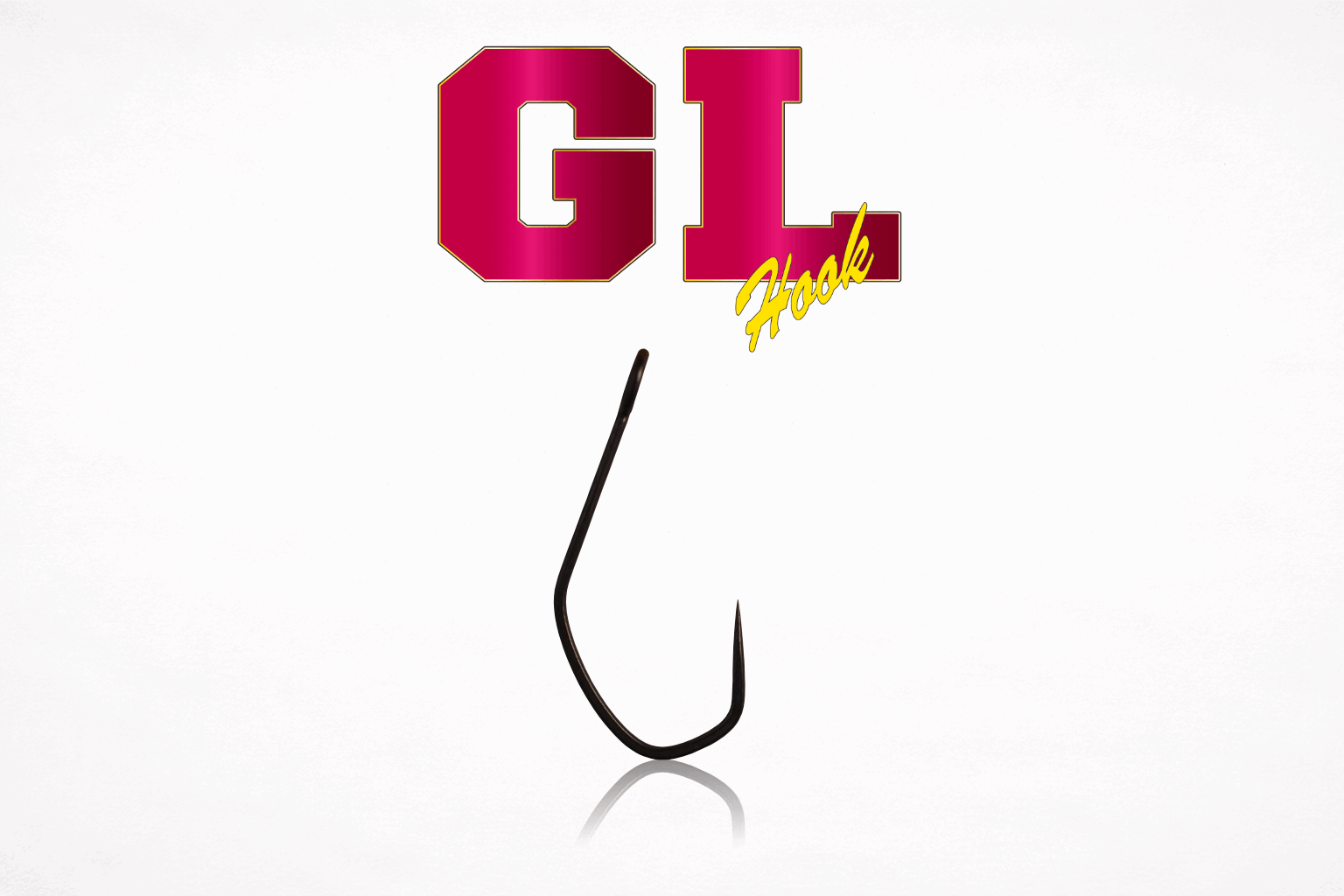
GL Hook uses a unique shape with the hook point turned toward the eye. This reduces force loss during the hookset, allowing the point to receive force in a straighter line and penetrate deeply.
Especially with slow hooksets or reel-set hook-ups, the very tip of the point can easily become the pivot, resulting in a shallow hook-up and more lost fish. GL Hook lets the point bury in more naturally even in those situations, greatly reducing fish that come off.
It also uses a slightly longer throat with an effective angle, helping it hold fish securely once hooked. The result is a shape that balances easy penetration with strong retention.
It is especially effective for slow hooksets, reel-set styles, and “load-up” techniques with crankbaits and similar lures. If you are getting bites that do not stick, or fish that come off quickly after the hook-up, switching to GL Hook can improve your landing rate.
Hook size
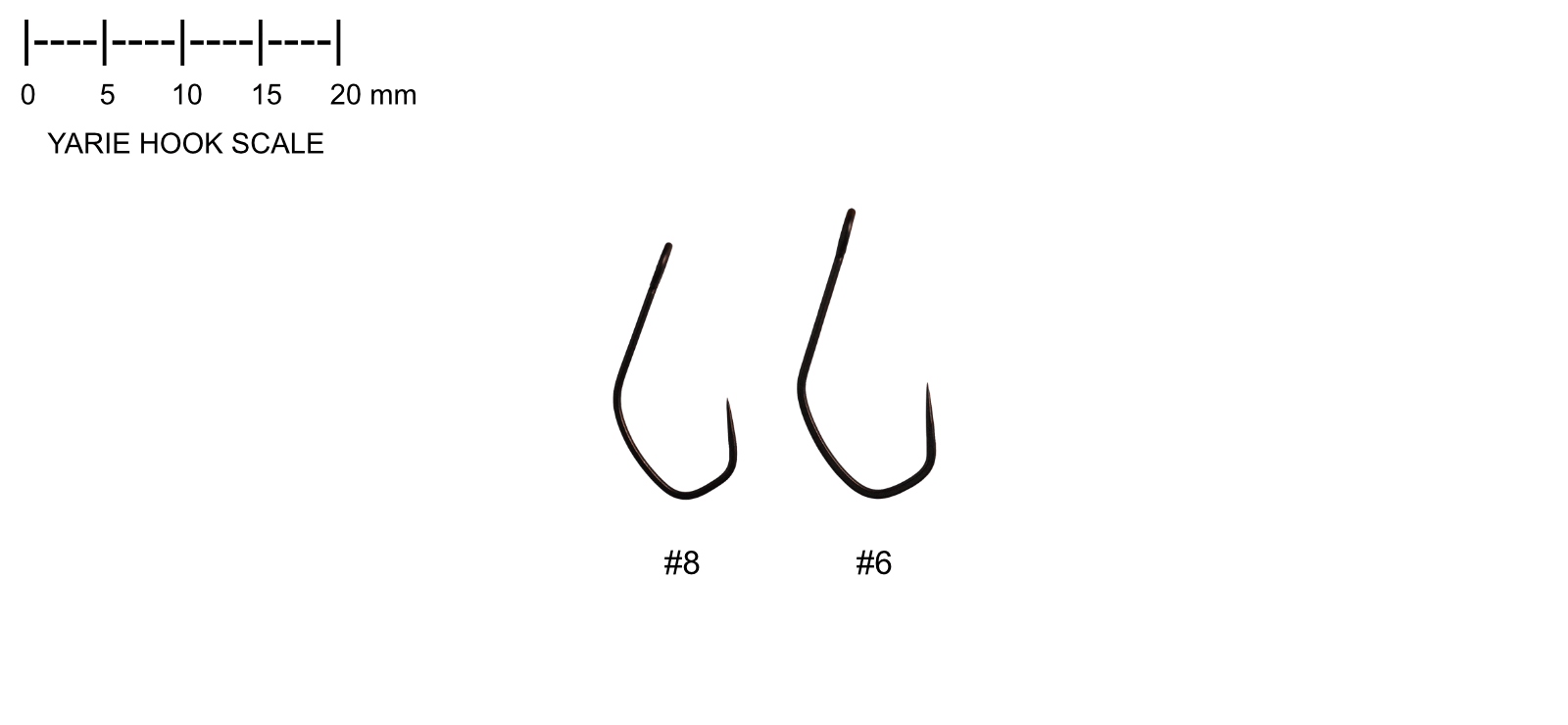
#6
A size suited to medium and heavier spoons. Especially well balanced with spoons in the 2.0 g to 3.0 g class, making it strong for stocking patterns and offshore searching. Also recommended for minnows.
Hook size
#8
The core size for lightweight spoons. Balanced for spoons around 0.7 g to 1.5 g, and, like #7, one of the sizes you will use most often. Also recommended for minnows.
Specification
Spec
YARIE Area Trout Hook Guide
Choose by Situation: YARIE Hook Select Map
Each YARIE area-trout hook has a different role. From targeting high activity right after stocking, to handling short bites in low-activity conditions, to reducing lost fish, they are designed so you can choose the best hook for each situation.
Tournament Time Map / SPOON
In a typical tournament, it is effective to rotate hooks according to changes in fish activity.
Mid Stage / Response Starts to Fade
Late Stage / Low Activity and Pressured Fish
Plug Hook Guide
For plugs such as crankbaits, minnows, and metal vibes, use the ST series and KZF as a base, then rotate hooks according to the situation.
Crankbaits
Compared with the ST hook, the STm uses a finer wire and is better suited for difficult conditions. If you want to prioritize landing percentage, a vertical-eye hook with a double ring is also recommended.
Floating Cranks and Micro Cranks
For floating-style cranks and micro cranks such as Dangyo, Pico Chata Cra, and Pico Pico Eagle Player, STm Hook or NK Hook is recommended. Try STm Hook when fish do not fully turn on the bite, and NK Hook when rolling bites are more common.
Metal Vibes and Bottom Lures
ST Hook, STm Hook, and NK Hook are recommended. If hooking is difficult with ST Hook or STm Hook, switching to NK Hook is recommended.
Topwater
Because fish tend to roll on topwater lures, FA Hook and NK Hook are recommended. ST Hook and STm Hook can also be used according to the situation.
Rising Minnows
ST Hook is the basic choice. When hooking is difficult, STm Hook is recommended. To reduce fish coming off, try GL Hook or PM Hook; if you want a fine-wire hook that also helps reduce lost fish, try NK Hook.
About YARIE Hooks
Japanese-made hooks backed by Banshu hook-making craftsmanship.
Drawing on a century of accumulated metalworking technology and hook-making know-how, YARIE pursues hook designs that balance coating, material, sharpness, and strength.

Coating
Surface treatment that supports penetration and durability.
Material
Material selection that supports toughness and resilience.
Sharpness
A sharp hook point created through long tapering and precision processing.
Toughness
Strength and stability created by flattening treatment.
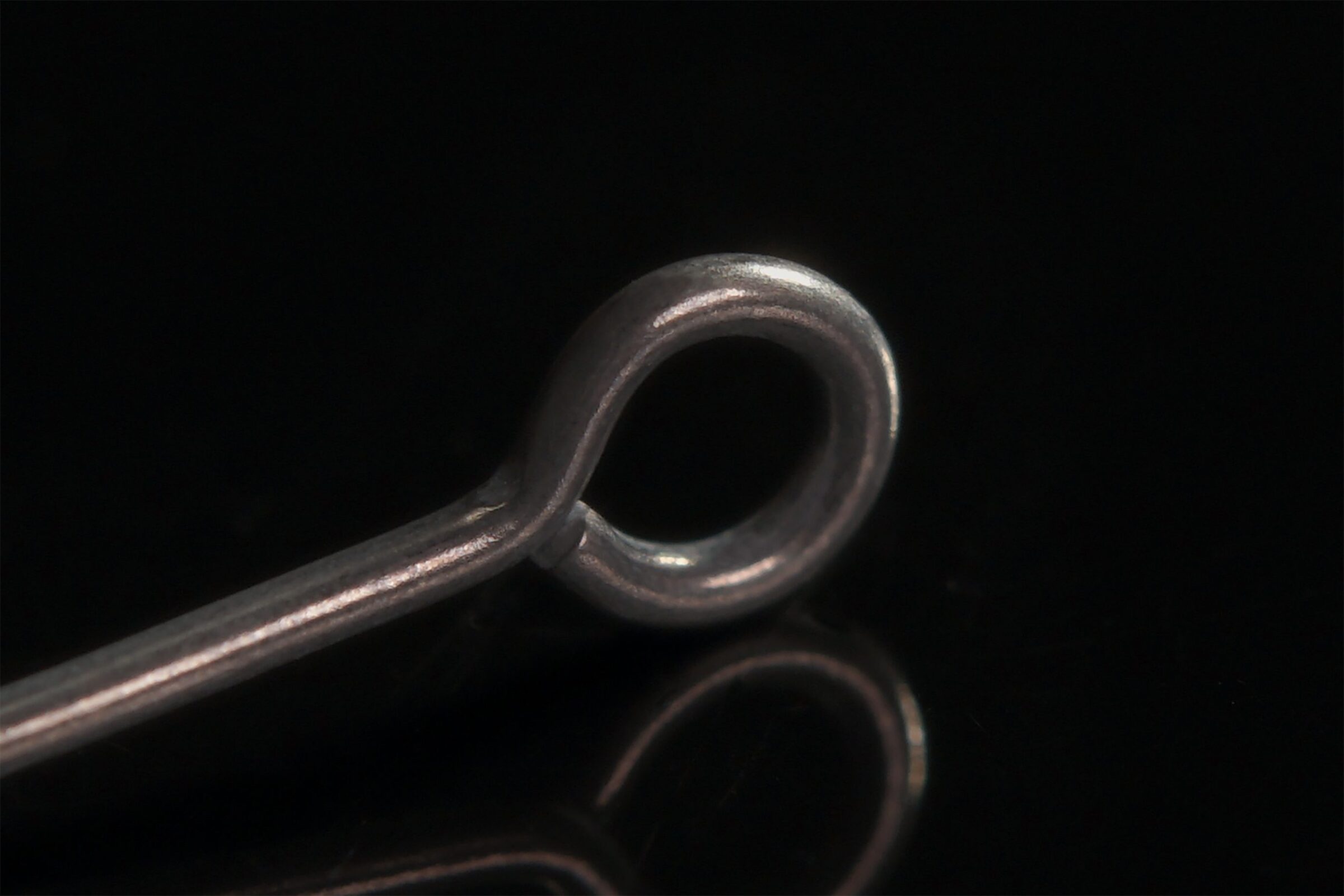
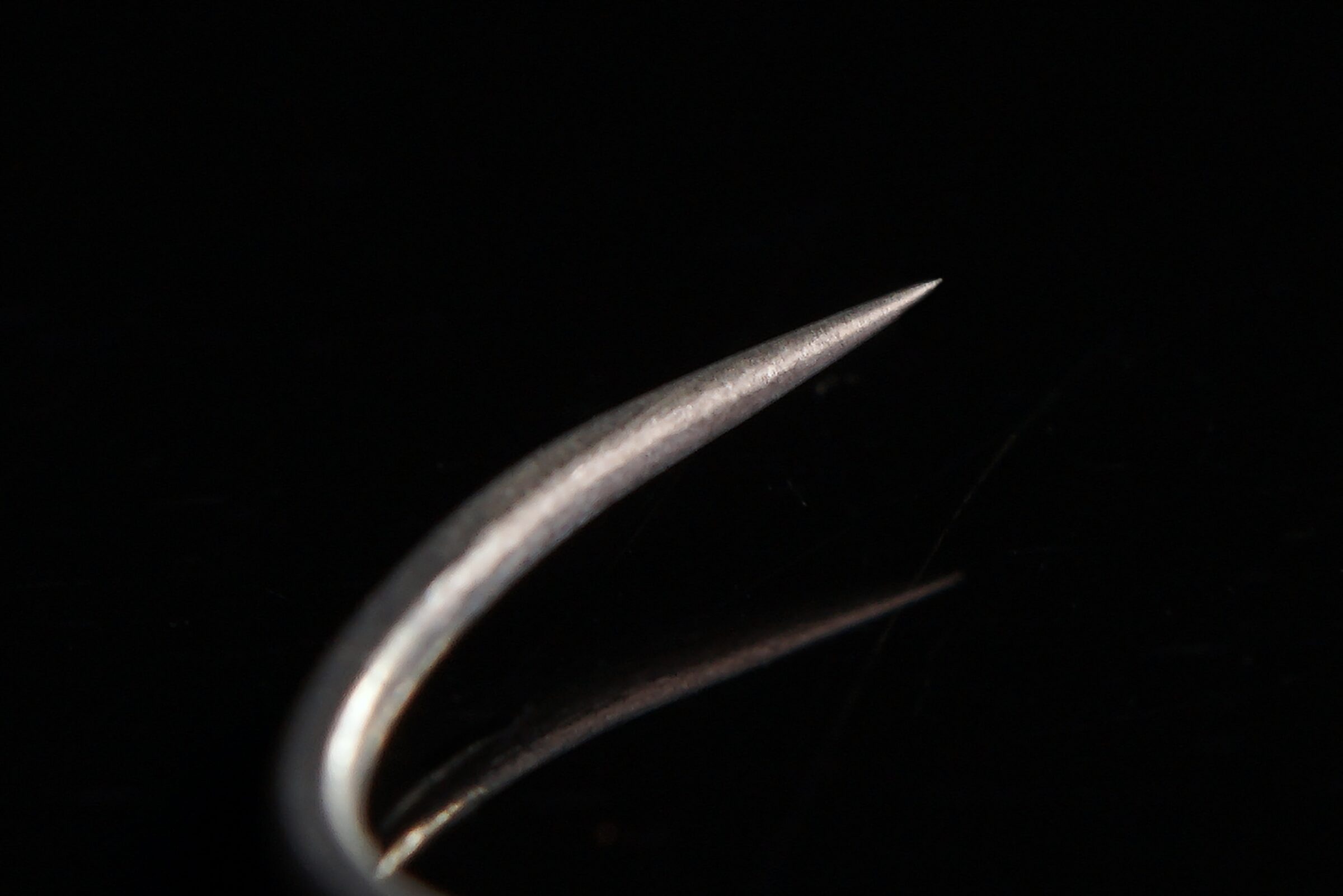
YARIE hooks are designed on the foundation of hook-making technology from the Banshu region of Hyogo Prefecture, Japan's largest hook-production area. Banshu hooks stand at the center of Japan's long hook-making tradition and are known worldwide for their strength and sharp hook points.
Founded in 1925, YARIE is a tackle maker also known as the first company in Japan to manufacture metal swivels. That metalworking expertise and long experience in tackle development continue to shape YARIE's hook design today.
Under quality control in Japan, YARIE pursues sharp hook points and consistent strength. Rather than flashy looks, the focus is on dependable performance you can trust on the water.