
Japan's First Metal Swivel
We developed a metal swivel with an anti-twist mechanism. It became one of the landmark inventions in the history of Japanese fishing tackle.
Since 1925
The story of Creative Fishing Gear, supporting the evolution of Japanese fishing tackle from the tool side for more than 100 years.
Carrying on Banshu hook-making and metalworking traditions, we have continued refining ideas and performance to match the fishing of every era.
SCROLLCREATIVE FISHING GEAR
Since its founding in 1925, YARIE has created many new tools throughout the history of Japanese fishing tackle, backed by the technology of Banshu hook making. Our goal is not simply to make products, but to help fishing itself become more interesting and more refined. That philosophy is what we put into the words Creative Fishing Gear.
We developed a metal swivel with an anti-twist mechanism. It became one of the landmark inventions in the history of Japanese fishing tackle.
We were among the first to develop the hanakan, an important component in ayu fishing, helping support a new style of fishing.
We introduced jig heads in the early days of black bass fishing, expanding the possibilities of lure fishing. It also became Japan's first jig head made with domestically produced Banshu hooks.
We brought small-size jig heads to market at an early stage, helping create the momentum that expanded light-game fishing.
We proposed ultra-light spoons for area trout fishing from an early stage, opening up a new level of finesse and sensitivity in the sport.
BRAND PHILOSOPHY
Built on Banshu hook-making and metalworking technology, YARIE has always pursued the tools truly needed for the fishing of each era. Not just shape, but reliability in real fishing conditions. Not just design, but a difference you can feel every time you use it. YARIE craftsmanship values both: technology supported by history, and ideas born from the field.
1925
YARIE founder Tamaji Yaragara made his living by farming while also producing parts for geta, Japan's traditional wooden footwear. By the time he founded YARIE in 1925, 71 years had passed since Japan ended its isolation policy, and the clothing of ordinary people was already shifting dramatically from kimono-centered Japanese dress to Western styles.
1931
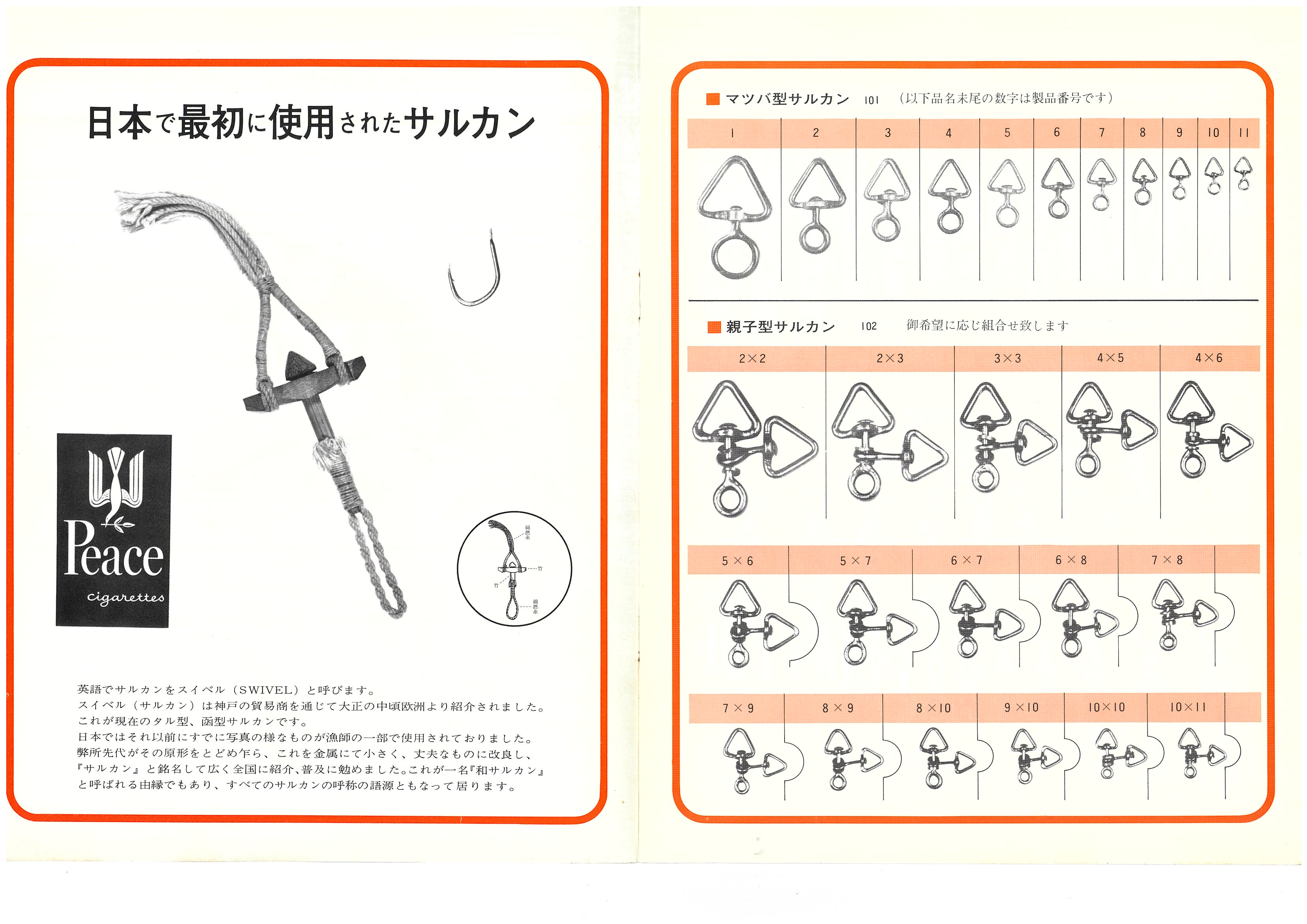
Tamaji Yaragara was the first person to conceive the metal swivel now widely used throughout Japan. In 1931, he named the newly developed swivel "Sarukan," filed it as a utility model, and secured the related rights. At the time, simple swivels made from bamboo or thread were common in fishing tackle, but the metal sarukan was compact, dimensionally stable, and highly durable. Because of its practicality, it spread rapidly among Japanese anglers and became one of the major inventions in Japan's fishing-tackle history.
1970–1980
Yukihiro Yaragara, the third generation and current president, joined the YARIE business during Japan's era of rapid economic growth and prosperity. In this period, commercial fishing gradually declined as a profession, while fishing increasingly became a widely enjoyed leisure activity. In addition to this domestic trend, YARIE quickly recognized the growing spread of lure fishing in Europe and North America and, ahead of many competitors, focused its efforts on developing lure-related products.
1993–1997
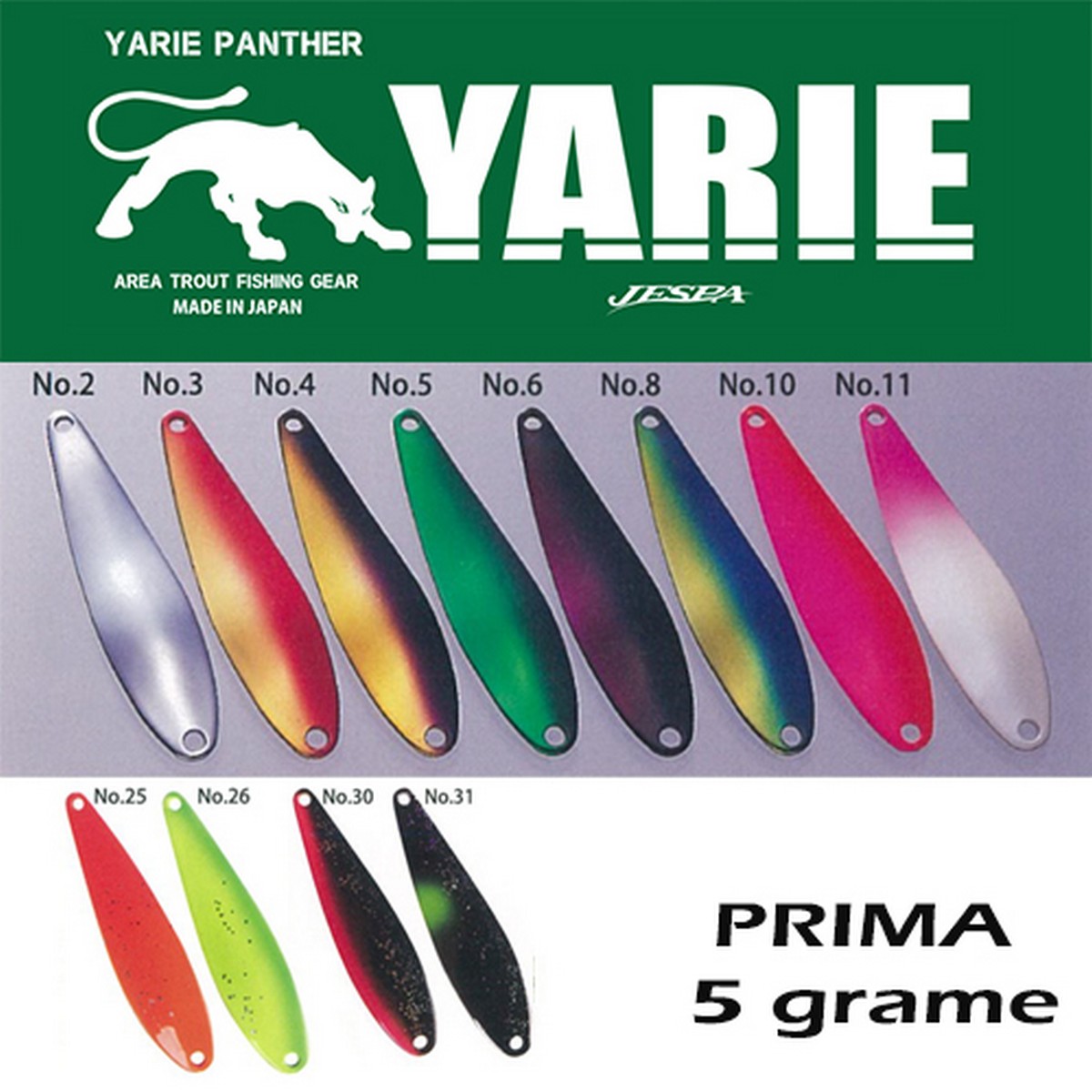
In 1993, ahead of other companies, YARIE developed a black-bass jig head using Banshu hooks. Then in 1997, it released the spoon lure "Prima," designed specifically for trout fishing. Hyogo Prefecture, where YARIE was founded, has long been known as one of Japan's major hook-producing regions, and hooks made there have been highly regarded under the name "Banshu hooks." YARIE has consistently maintained a strong commitment to quality, working to create lures that surpass competing products in craftsmanship and performance.
A CENTURY OF TACKLE MAKING
FROM HERITAGE TO THE NEXT CAST
YARIE marked its 100th anniversary in 2025. While protecting the craftsmanship that has been passed down through generations, we have also valued evolving it into the performance demanded by modern anglers. The manufacturing culture cultivated in Japan is now supported in more than 30 countries and regions. Without relying on history alone, YARIE will continue creating tools that make the next cast, and the next era of fishing, even more exciting.